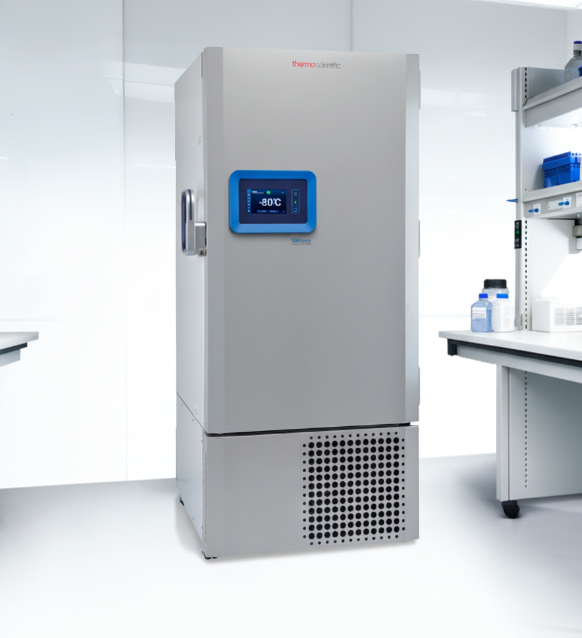

Sustainable -80°C/-70°C Storage. Maximum Sample Protection.
The Thermo Scientific™ TSX700 is a high-capacity ultra-low temperature (ULT) freezer designed to meet the most rigorous standards in sustainability, temperature uniformity, and sample security. Engineered for -80°C and -70°C storage, the TSX700 is ideal for long-term preservation of biologicals, vaccines, and other critical materials in research, pharmaceutical, and clinical laboratories.
Key Features:
High-capacity storage – Ideal for biobanks, research labs, and high-throughput sample storage
V-Drive technology – Adapts to user patterns, reducing energy consumption without compromising performance
Sustainable cooling – Operates on natural refrigerants for reduced environmental impact
Temperature range: -50°C to -86°C with exceptional stability and recovery
Whisper-quiet operation – As low as 47 dBA for a quieter lab environment
Easy-to-use touchscreen interface – Simplifies monitoring and data logging
Advanced security features – Built-in alarms, remote monitoring capability, and lockable doors
Why Choose TSX Series Freezers?
With ENERGY STAR® certification and advanced V-Drive adaptive technology, the TSX700 delivers maximum performance and energy efficiency, making it a smart and eco-conscious solution for critical cold storage.
Protect your research and reduce your lab's energy footprint with the trusted reliability of the Thermo Scientific™ TSX Series.

Flexible, dual-chamber cold storage for biomedical applications. The PHCbi MDF-MU549DHL-PA is a dual chamber biomedical freezer...
Learn More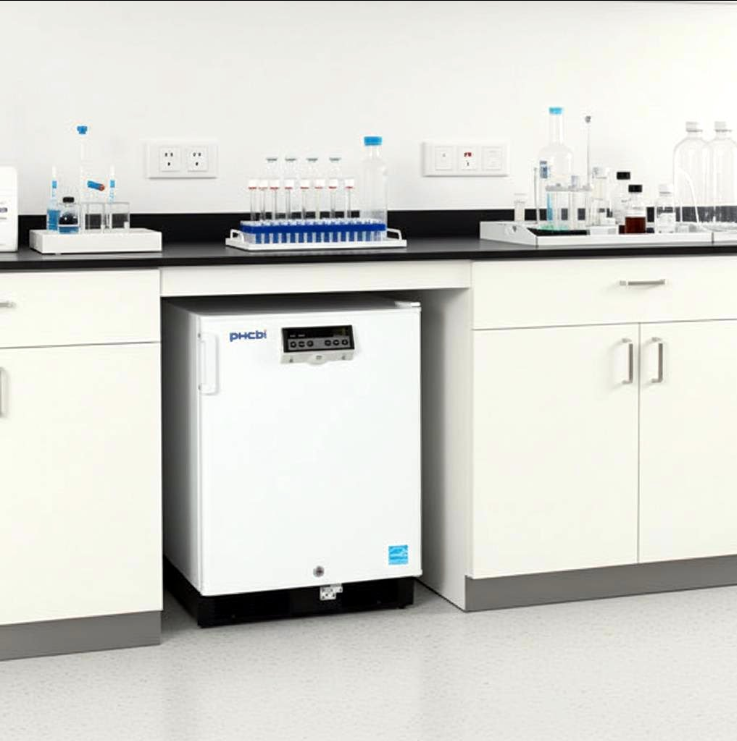
Precise, Reliable Cold Storage for Small-Scale Vaccine Applications Our compact vaccine storage units are designed for...
Learn More
Space-saving design. Independent performance. Trusted temperature control. Our Combo Refrigerator/Freezer Cabinets are the ideal solution for...
Learn More

